

For more than a decade, the single most feared dashboard indicator for any commercial truck driver or fleet owner has not been an oil pressure drop or an overheating engine. Instead, it has been the dreaded Selective Catalytic Reduction (SCR) warning light accompanied by a digital countdown timer. Under strict mandates enforced by the Environmental Protection Agency (EPA), heavy-duty diesel trucks have been forced into software-driven power reductions—commonly known as engine derates—whenever the vehicle detects an issue within its emissions control array.
While well-intentioned from an environmental perspective, the reality of forced derating has inflicted severe operational scars across the logistics sector. In a stunning regulatory pivot, the EPA has officially introduced a groundbreaking 2026 proposal that aims to fundamentally restructure heavy-duty diesel emission compliance framework. At the heart of this sweeping update is the total elimination of forced, mandatory engine deratements for sensor anomalies and fluid warnings. This major shift promises to reshape commercial vehicle operations, offering a massive boost to real-world highway safety, supply chain continuity, and long-term diesel truck reliability.
Understanding the Modern Nightmare: What is an Engine Derate?
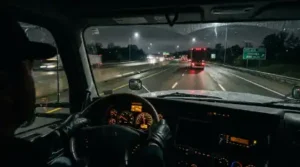 To fully appreciate the impact of this new regulatory proposal, one must understand how the current compliance infrastructure operates. When the EPA introduced strict tier-level emissions guidelines over the past decade, they required truck manufacturers to install highly complex Aftertreatment Systems (ATS). These setups rely heavily on Diesel Exhaust Fluid (DEF)—a urea-based solution injected into the exhaust stream to break down dangerous nitrogen oxides ($NO_x$) into harmless nitrogen and water vapor.
To guarantee that operators would never run their trucks without DEF, the EPA mandated that engine control units (ECUs) utilize hardcoded software traps. If a truck runs completely out of DEF, if the quality of the fluid degrades, or if any of the highly sensitive $NO_x$ sensors embedded in the exhaust pipe fail, the computer systematically limits the engine’s capability. The initial stage cuts power by roughly 25% to 40%. If the fault condition is not resolved within a specified mileage or time window, the truck triggers a “severe derate,” limiting top speed to a crawl—often exactly 5 miles per hour.
The core problem is that these computers are completely incapable of distinguishing between a massive, environmentally damaging equipment failure and a simple, broken $50 sensor wire. As a result, hundreds of thousands of trucks hauling critical goods have been abruptly forced into turtle-mode on fast-moving interstate highways, creating severe safety hazards and costing small businesses thousands of dollars in emergency towing and diagnostics.
The Mechanical and Safety Failure of Forced Power Cut-offs
The transportation industry has long argued that the forced derate system creates a cure that is arguably worse than the disease. When a fully loaded, 80,000-pound tractor-trailer suddenly drops to 5 mph while navigating a major metropolitan highway interchange or ascending a mountain pass, it immediately becomes a massive kinetic hazard to surrounding motorists. Drivers are routinely forced to make erratic lane changes to pull onto narrow highway shoulders, escalating the risk of catastrophic rear-end collisions.
From a mechanical perspective, forced derates actively accelerate component degradation. When an engine is forced to operate in a severely restricted, choked-down software mode, exhaust gas temperatures (EGTs) typically plummet out of their optimal operating windows. In a modern diesel engine, low EGTs prevent the Diesel Particulate Filter (DPF) from naturally burning off accumulated soot. This rapidly results in heavy soot accumulation, clogged filter faces, and high exhaust backpressure—ironically forcing the truck into the shop for intensive physical maintenance that could have been completely avoided if the engine had been allowed to run freely at full highway speed.
Inside the 2026 EPA Proposal: What is Actually Changing?
The newly unveiled 2026 EPA regulatory framework represents a pragmatic reconciliation between ecological protection and logistics reality. Under the revised guidelines, the federal government is shifting its compliance strategy away from punitive, vehicle-disabling software locks and focusing squarely on advanced driver notification and expanded manufacturer accountability. The core elements of the proposal include:
- Transition to Active Warnings: Hardcoded, speed-limiting engine derates are completely banned for DEF level warnings, fluid quality issues, and non-critical sensor faults. They are replaced by high-visibility dashboard warning indicators, persistent text alerts, and loud audible cab alarms.
- Extended Extended-Warranty Mandates: The proposal significantly extends the legally mandated emissions warranty windows for heavy-duty truck manufacturers. This shifts the financial burden back to the builders, forcing brands like Cummins, Detroit Diesel, and PACCAR to engineer more resilient, failure-proof sensor networks.
- Tamper-Evident Logging Integration: To prevent rogue operators from simply ignoring warning lights indefinitely, the new rule leverages the existing Electronic Logging Device (ELD) infrastructure. The truck’s ECU will record exact time-stamped logs of emissions faults, allowing Department of Transportation (DOT) officers to easily check and penalize non-compliance during standard roadside weight station inspections.
Economic and Operational Relief for Fleet Managers
For fleet managers and owner-operators running thin profit margins, the economic relief brought by the removal of forced derating cannot be overstated. Under the current rules, a single faulty DEF quality sensor can instantly derail a cross-country delivery, causing missed shipping windows, expensive cargo claims, and massive roadside assistance outlays. In many remote regions, getting an authorized mobile technician out to reset a hardlocked ECU can take anywhere from 12 to 36 hours.
By shifting to an alarm-based compliance framework, a truck experiencing an ATS sensor fault can safely complete its current delivery run, return to its home maintenance terminal, and undergo proper repairs without disrupting the supply chain. This completely eliminates the need for expensive, reactionary highway towing services and keeps wheels turning during peak delivery schedules.
Looking to the Future: The 2026 and 2027 Truck Market
 As this proposal moves through the final federal register and public comment phases, truck manufacturers are already quietly re-engineering their powertrain software architectures. Fleet buyers can expect upcoming model-year iterations from heavyweights like Freightliner, Kenworth, Peterbilt, and Volvo to feature far more refined, informative diagnostic suites rather than the blunt-force instrument of the past.
Ultimately, the 2026 EPA proposal marks a turning point where regulatory bodies finally acknowledged that vehicle reliability and highway safety are completely inseparable from environmental policy. By eliminating the constant threat of a software-forced breakdown, the trucking industry takes a massive step forward toward a more stable, predictable, and remarkably more reliable era of diesel transport performance.