
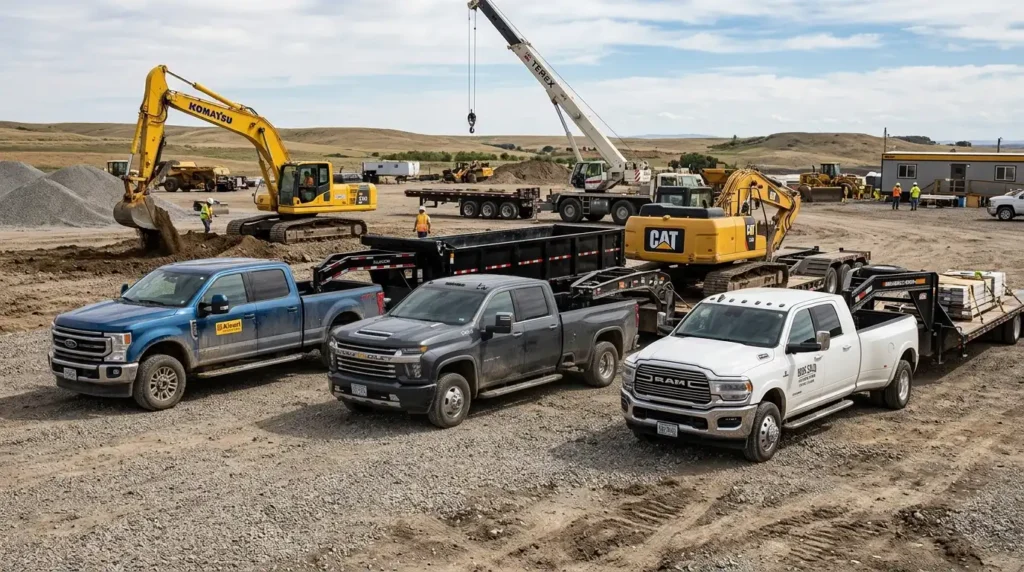
For fleet managers, independent contractors, and long-haul RV towers, a heavy-duty (HD) pickup truck is far more than a lifestyle statement—it is a critical revenue generator. When a Class 2b or Class 3 truck suffers a mechanical failure, the financial impact extends far beyond the repair bill; unexpected downtime on the job site or side of the interstate can stall projects and burn through thousands of dollars per day.
Comparing the reliability of the Ford Super Duty (F-250/F-350), General Motors HD (Chevrolet Silverado HD/GMC Sierra HD), and Ram HD (2500/3500) requires going deeper than early-ownership survey scores. Real-world reliability comes down to technical service bulletins (TSBs), National Highway Traffic Safety Administration (NHTSA) recalls, transmission hydraulic valve durability, and how well these powertrains withstand sustained high-torque towing.
Here is our comprehensive breakdown and official ranking of heavy-duty truck reliability.
#1. Ford Super Duty (F-250 & F-350): Strongest Drivetrain Mechanics
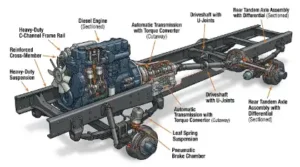
Taking the top spot in overall heavy-duty reliability, the Ford Super Duty establishes the strongest overall mechanical case for commercial operators and heavy haulers. Ford’s commitment to heavy-duty engineering shines through its robust powertrain lineup and high-capacity 10R140 TorqShift 10-speed automatic transmission.
Engine & Powertrain Performance
Ford offers three distinct heavy-duty engines, each demonstrating outstanding mechanical longevity under severe duty cycles:
- 6.8L DEVCT Gas V8: The fleet-spec pushrod engine delivering bulletproof simplicity with zero turbocharging or complex valvetrain overhead.
- 7.3L “Godzilla” Gas V8: An iron-block workhorse celebrated for high low-end torque, cast-iron crank, and exceptional thermal management under heavy payload.
- 6.7L Power Stroke V8 Turbo Diesel: Available in standard (475 hp / 1,050 lb-ft) and High-Output (500 hp / 1,200 lb-ft) configurations, featuring a graphite-iron block and forged steel pistons built for hundreds of thousands of miles.
The Reliability Reality: Software vs. Mechanical Defects
While Ford tops the mechanical durability rankings, it is not immune to factory recalls. The NHTSA has flagged several campaign recalls affecting recent Super Duty model years, primarily centered around electrical modules, instrument panel clusters, and trailer brake controller communications. However, the vast majority of Super Duty recalls involve quick software reflashes or minor harness inspections rather than catastrophic engine or transmission teardowns.
Because the heavy-duty 10R140 TorqShift transmission was engineered independently from lighter light-duty variants, Ford HD owners experience remarkably few transmission failures when hauling max-rated gooseneck trailers.
#2. General Motors HD (Chevrolet Silverado HD & GMC Sierra HD): Elite Engines Hindered by Transmission Recalls
Slotting into second place, the mechanically twin Chevrolet Silverado HD and GMC Sierra HD offer world-class diesel engine performance paired with a comfortable cab layout. However, recent wide-scale transmission valve body controversies prevent GM from capturing the top spot.
The L5P Duramax Triumph
Underneath the hood, GM’s 6.6L Duramax L5P V8 Turbo Diesel (producing 470 hp and 975 lb-ft of torque) remains one of the most refined and reliable diesel engines ever engineered. Featuring a hardened cast-iron block, aluminum heads, and a high-efficiency Denso common-rail fuel system, the L5P boasts an extremely low rate of internal engine failure. For gas-truck buyers, the base 6.6L L8T V8 provides crisp, direct-injected power with minimal maintenance demands.
The Allison-Branded 10-Speed Valve Body Controversy
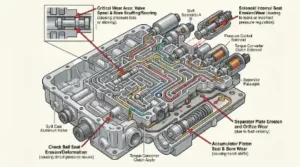 The primary weakness impacting GM HD reliability centers on the Allison-branded 10L1000 10-speed automatic transmission. While validated by Allison, the transmission was engineered and manufactured internally by GM.
Defects in early and mid-generation transmission control valve bodies led to excessive internal wear on control valves and separator plates. In severe cases, the transmission can attempt to engage two gears simultaneously, causing rear wheels to lock up at highway speeds or forcing the Transmission Control Module (TCM) to lock the vehicle into 5th-gear limp mode.
GM has issued recalls affecting hundreds of thousands of trucks, introducing updated “Gen 3” valve body components and software monitoring guardrails. While GM is actively correcting affected units, the threat of transmission-induced downtime knocks GM HD down to second place.
#3. Ram HD (2500 & 3500): Unmatched Engine Heritage with Redesign Question Marks
Rounding out the heavy-duty rankings in third position is the Ram 2500 and 3500 HD lineup. While Ram boasts an insanely loyal fanbase and one of the most legendary engines in industrial history, recent platform revisions and electrical quirks create long-term ownership uncertainty.
The Legend of the Cummins Inline-Six
The cornerstone of Ram HD reliability is the 6.7L Cummins Turbo Diesel Inline-6. Unlike the V8 configurations used by Ford and GM, the inline-six architecture offers fewer moving parts, massive main bearings, and incredible low-RPM pulling power. In High-Output trim, the Cummins engine delivers exceptional heavy-haul torque and proven cylinder block durability.
Transmission Calibration & Electrical Challenges
Historically, Ram’s in-house 68RFE automatic transmission was a well-known weak point for heavy towers. While heavy-duty Aisin 6-speed units handled high torque far better, recent model transition shifts have left buyers evaluating updated transmission calibrations.
Additionally, late-model Ram trucks have faced higher rates of owner complaints regarding body control modules, central electrical gateways, laggy Uconnect infotainment screens, and battery-drain Technical Service Bulletins (TSBs). While the Cummins block will comfortably run for 400,000 miles, the surrounding chassis components and electrical systems yield more frequent trips to the service bay.
Heavy-Duty Truck Reliability Comparison Matrix
| Brand & Model | Primary Engine Option | Transmission Platform | Top Reliability Strength | Main Potential Weakness |
|---|---|---|---|---|
| Ford Super Duty (F-250/350) | 6.7L Power Stroke V8 / 7.3L Godzilla V8 | 10R140 TorqShift 10-Speed | Bulletproof transmission durability under heavy load | Frequent minor electrical/module software recalls |
| GM HD (Silverado/Sierra) | 6.6L Duramax L5P V8 Diesel | Allison-Branded 10L1000 10-Speed | Smooth power delivery & bulletproof L5P block | Valve body wear causing transmission limp mode or lockup |
| Ram HD (2500/3500) | 6.7L Cummins Turbo Diesel I6 | 6-Speed Automatic / Updated Aisin setups | Class-leading inline-6 engine block simplicity & life | Electrical module glitches and battery-drain TSBs |
Key Buying Advice: How to Maximize HD Truck Longevity
No matter which heavy-duty brand you park in your driveway or fleet depot, following strict maintenance routines will double the operational lifespan of your truck:
- Fuel System Preservation: Diesel fuel injectors operate at pressures exceeding 30,000 PSI. Change fuel filters every 10,000 to 15,000 miles and utilize high-quality fuel additives to protect high-pressure pumps from water contamination.
- Severe-Duty Fluid Intervals: Heavy towing subjects transmission fluid and differential gear oil to extreme thermal cycles. Cut factory fluid service intervals in half if your truck hauls near its gross combined weight rating (GCWR) regularly.
- Address TSBs Immediately: Ensure your dealership completes all software calibration updates (specifically TCM reflash programs) during routine oil changes to prevent unexpected wear patterns on electronic valve bodies.