
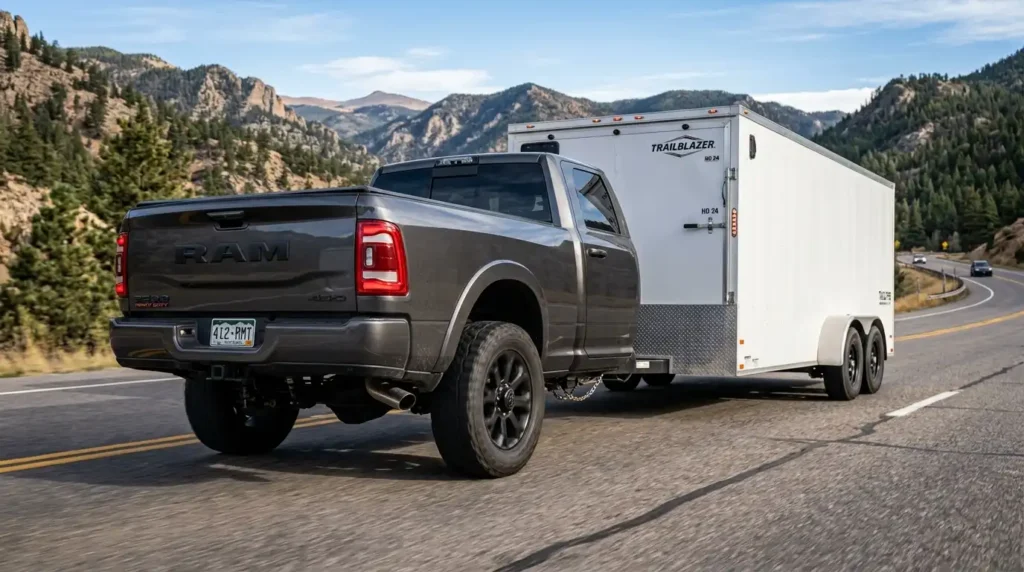
When shopping for a truck or preparing for a weekend haul, commercials routinely boast staggering numbers: “Tows up to 14,000 pounds!” or “Best-in-class payload!” It is easy to assume that if a truck is rated to tow a specific weight, it can easily handle any trailer matching that number. However, confusing payload capacity with towing capacity is the single most common—and potentially dangerous—mistake truck owners make.
1. Defining Payload Capacity: What Your Truck Carries
In simple terms, payload capacity is the maximum amount of weight your truck can carry directly on its own frame and suspension. This includes everything sitting inside the cab and bed.
Many drivers assume payload applies only to gravel, timber, or tools thrown into the truck bed. In reality, payload accounts for:
- Passengers: The driver and every passenger sitting inside the cab.
- Cargo & Gear: Tools, luggage, coolers, aftermarket accessories (like bed liners, steel bumpers, and tonneau covers), and cab equipment.
- Trailer Tongue Weight: The downward force exerted by a trailer onto the hitch ball mount.
Payload capacity is dictated by your vehicle’s Gross Vehicle Weight Rating (GVWR)—the absolute maximum allowable weight of the fully loaded truck itself. Subtracting your truck’s empty curb weight from its GVWR gives you your maximum payload limit.
2. Defining Towing Capacity: What Your Truck Pulls
Towing capacity measures the maximum weight your truck can safely pull behind it on a trailer. While payload measures downward weight resting directly on the chassis, towing capacity measures horizontal load pulled along the road.
A truck’s max tow rating is governed by several mechanical systems:
- Engine Torque & Horsepower: The raw force needed to pull a heavy load up steep grades.
- Transmission & Differential Cooling: Heat management systems designed to prevent fluid breakdown under heavy strain.
- Braking Power: The ability of the truck’s service brakes and trailer brake controller to bring the entire rig to a controlled stop.
- Gross Combined Weight Rating (GCWR): The maximum total allowable weight of the loaded truck combined with the loaded trailer.
3. The Overlooked Link: How Tongue Weight Bridges Payload and Towing
The primary reason truck owners inadvertently overload their vehicles lies in the physical relationship between trailer tongue weight and truck payload.
When you couple a conventional bumper-pull trailer to your truck hitch, the trailer does not carry 100% of its own weight on its axles. For a trailer to tow stably without dangerous trailer sway, roughly 10% to 15% of the total trailer weight must press down on the hitch ball. This downward force is known as tongue weight (or pin weight for 5th-wheel and gooseneck trailers, which usually ranges from 15% to 25%).
Crucial Rule: Trailer tongue weight counts directly against your truck’s payload capacity.
4. Real-World Math: Why You Max Out Payload Before Towing Capacity
To understand how this plays out on the road, consider a common scenario involving a modern half-ton crew cab pickup truck:
- Advertised Max Towing Capacity: 11,000 lbs
- Max Payload Rating (on door sticker): 1,500 lbs
Suppose you purchase an enclosed camper trailer weighing 8,000 lbs fully loaded—well within your truck’s 11,000 lb towing ceiling.
At an industry-standard 12% tongue weight, that 8,000 lb trailer places 960 lbs of direct downward weight onto your hitch ball.
Now calculate your remaining payload capacity:
- Starting Payload Limit: 1,500 lbs
- Minus Tongue Weight (960 lbs): Leaves 540 lbs
- Minus Driver & Passengers (400 lbs): Leaves 140 lbs
- Minus Bed Gear, Coolers & Hitch (200 lbs): OVER CAPACITY BY 60 LBS!
Even though the trailer was 3,000 lbs under the truck’s maximum pulling capacity, the vehicle is legally overloaded because it ran out of payload capacity first.
5. The Risks of Overloading and How to Tow Safely
Operating a truck past its rated payload or GVWR severely impacts vehicle handling and structural integrity:
- Suspension Sag & Unweighting the Front Axle: Excessive rear tongue weight squashes the rear suspension, aiming headlights into oncoming traffic and reducing front tire grip needed for steering and braking.
- Overheated Brakes & Transmission Failure: Exceeding GCWR strains transmission torque converters and leads to severe brake fade during long downhill descents.
- Liability & Legal Exposure: In the event of a highway accident, law enforcement and insurance adjusters can check vehicle scale weights. Exceeding rated door-jamb weight limits can void insurance coverage and open drivers to civil liability.
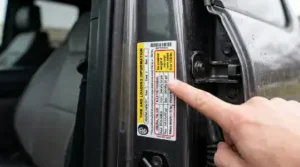
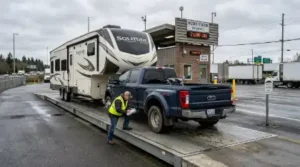
How to Verify Your Weights: Always check the specific Tire and Loading Information sticker located inside your driver-side door jamb rather than relying on general marketing brochures. For complete peace of mind, drive your fully loaded rig across a commercial truck scale (such as a CAT scale) to get accurate front axle, rear axle, and trailer axle weight readings.